

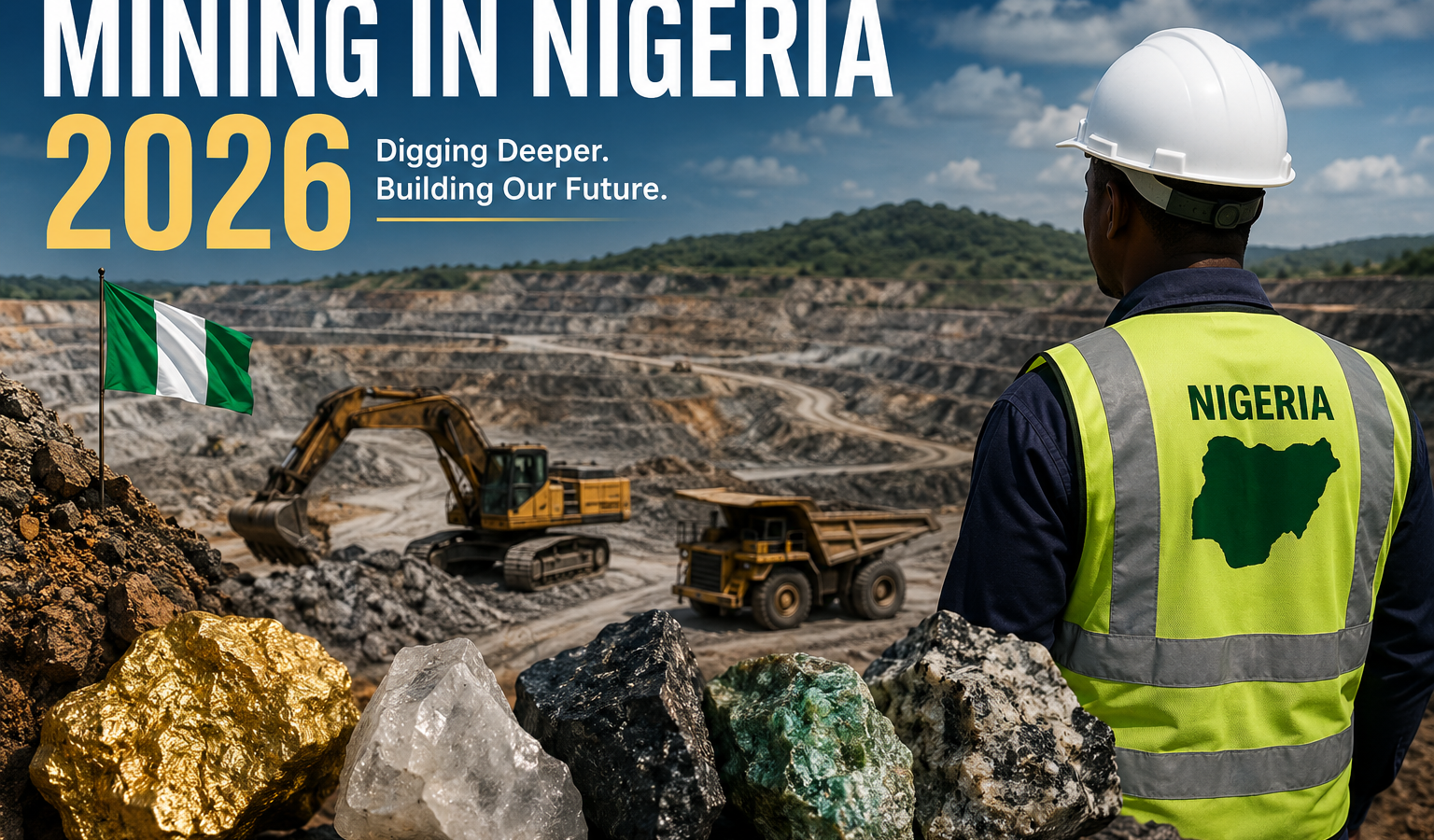
For decades, Nigeria has been known as the giant of Africa because of oil. Crude oil built cities, funded governments, created billionaires, and shaped the country’s economy. But in 2026, another quiet revolution is happening beneath the surface of the nation — literally.
Deep under the rocks, forests, and hills of Nigeria lies a hidden economic treasure that many people are only beginning to understand: mining.
From gold in Zamfara to lithium in Nasarawa, bitumen in Ondo, limestone in Kogi, and tin in Plateau, Nigeria is sitting on mineral wealth worth billions of dollars. What makes this even more interesting is that the global economy is changing rapidly. The world is moving toward electric vehicles, renewable energy, batteries, technology manufacturing, and infrastructure development — all industries that depend heavily on minerals.
And suddenly, Nigeria is becoming impossible to ignore.
The New Global Obsession: Minerals
In 2026, countries are no longer fighting only for oil dominance. The real battle is now about critical minerals.
Lithium powers electric car batteries. Cobalt supports energy storage systems. Copper is essential for power transmission. Gold remains valuable for investment and technology. Rare earth minerals are used in electronics, defense systems, and smartphones.
As the world races toward green energy and advanced technology, nations that control mineral resources are gaining strategic importance.
Nigeria has entered that conversation.
For years, the country’s mining sector remained underdeveloped. Oil received most of the government’s attention while mining operated largely in the shadows. Illegal mining thrived. Local communities remained poor despite living on mineral-rich land. Investors were cautious because of insecurity, poor infrastructure, and inconsistent regulations.
But things have started changing.
Nigeria’s Mining Sector Is Waking Up
In 2026, mining is no longer viewed as a “side sector” of the economy. It is becoming one of the government’s major diversification strategies.
Several factors are driving this shift:
- The instability of oil prices
- The global demand for battery minerals
- Increased foreign investor interest
- The need for job creation
- Growing awareness of untapped mineral wealth
States that were once overlooked are now attracting attention from international mining companies and local investors.
Lithium, especially, has become one of the hottest conversations in Nigeria’s mining industry.
The Lithium Fever
If oil defined Nigeria in the past, lithium may shape part of its future.
Lithium is a key component in rechargeable batteries used in electric vehicles, laptops, smartphones, and renewable energy storage systems. As companies around the world push for cleaner energy, demand for lithium has exploded.
Nigeria possesses commercially viable lithium deposits in states such as Nasarawa, Kogi, Kwara, Ekiti, and Kaduna.
In recent years, Chinese companies and other foreign investors have increased their presence in Nigeria because of lithium exploration and processing opportunities. Processing plants are gradually emerging, signaling a shift from merely exporting raw minerals to creating more local value.
This is where the real opportunity lies.
Countries that simply export raw minerals often remain poor despite being resource-rich. But countries that process, refine, manufacture, and build industries around those minerals create jobs, infrastructure, and long-term economic growth.
Nigeria now stands at a crossroads:
Will it merely sell rocks, or will it build industries?
That question may define the future of the sector.
Gold Mining: Wealth and Controversy
Gold remains one of Nigeria’s most talked-about mineral resources.
Large deposits exist in Zamfara, Kebbi, Kaduna, Osun, Niger, and several other states. Artisanal miners — many operating informally — have extracted gold for years using basic equipment.
But gold mining in Nigeria has also exposed serious problems.
Illegal mining operations have led to:
- Environmental destruction
- Child labor
- Banditry financing
- Community conflicts
- Health hazards from unsafe practices
In some areas, armed groups reportedly profit from illegal mining activities. This has forced the government to rethink regulation and security in mining regions.
Yet despite the problems, the opportunities remain enormous.
Formalizing artisanal mining could transform thousands of lives. With proper regulation, training, and access to financing, small-scale miners could become legitimate contributors to the economy instead of operating in dangerous informal systems.
The Untapped Fortune Most Nigerians Ignore
One surprising reality is that many Nigerians still underestimate the scale of the country’s mineral wealth.
Nigeria has over 40 different solid minerals spread across various states. These include:
- Coal
- Iron ore
- Marble
- Granite
- Limestone
- Bitumen
- Lead
- Zinc
- Gypsum
- Barite
- Sapphire
Many of these resources are essential for construction, manufacturing, technology, agriculture, and industrialization.
For example:
- Limestone is critical for cement production.
- Granite supports infrastructure development.
- Barite is used in oil drilling.
- Bitumen can support road construction.
- Iron ore feeds steel production.
In simple terms, mining is not just about digging minerals from the ground. It affects roads, housing, technology, transportation, manufacturing, energy, and even national security.
That is why many analysts believe mining could become one of Nigeria’s strongest economic pillars if properly managed.
The Challenges That Could Destroy the Dream
Despite the excitement surrounding mining in 2026, serious obstacles remain.
Insecurity
Some mineral-rich regions face banditry, kidnappings, and violent conflicts. Investors are often reluctant to commit large capital in unstable areas.
Illegal Mining
A large percentage of mining activities still happen outside formal regulation. This means government loses revenue while environmental damage increases.
Poor Infrastructure
Mining requires roads, rail systems, electricity, and water supply. Many mining communities still lack these essentials.
Environmental Concerns
Unregulated mining can destroy farmland, pollute water sources, and damage ecosystems.
Corruption and Weak Oversight
Without strong institutions, mining wealth can disappear into private pockets instead of benefiting communities and the nation.
These challenges are significant. Many African countries rich in minerals have remained poor because leadership failed to manage resources wisely.
Nigeria must avoid that trap.
The Real Opportunity Is Bigger Than Mining
Perhaps the most important lesson is this: the future is not just in mining minerals — it is in building ecosystems around them.
The countries that truly prosper are not always the ones with the most resources. They are the ones that create industries around those resources.
That means:
- Processing plants
- Manufacturing industries
- Research and development
- Skilled labor training
- Export systems
- Technology innovation
- Industrial hubs
Mining alone does not create prosperity. Industrialization does.
And that may become Nigeria’s biggest test in the coming years.
A Silent Revolution Beneath the Ground
Many Nigerians still discuss wealth mainly in terms of oil, real estate, or tech startups. Meanwhile, a silent economic revolution is developing beneath the nation’s soil.
The global hunger for minerals is increasing.
Foreign investors are watching.
Governments are repositioning.
Industries are evolving.
Nigeria’s mining sector may still be underdeveloped, but in 2026, it is no longer invisible.
The question is no longer whether Nigeria has mineral wealth.
The real question is whether Nigeria can finally turn that buried wealth into national transformation instead of another missed opportunity.
Leave a Reply